


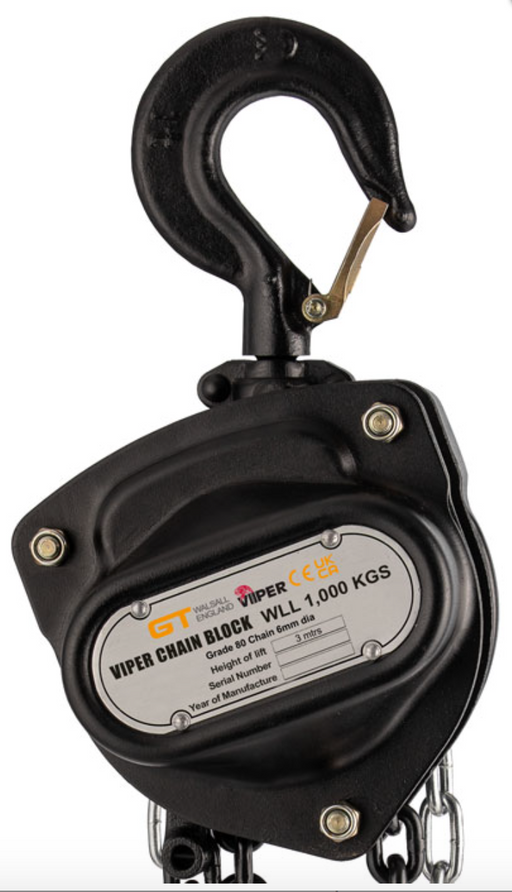
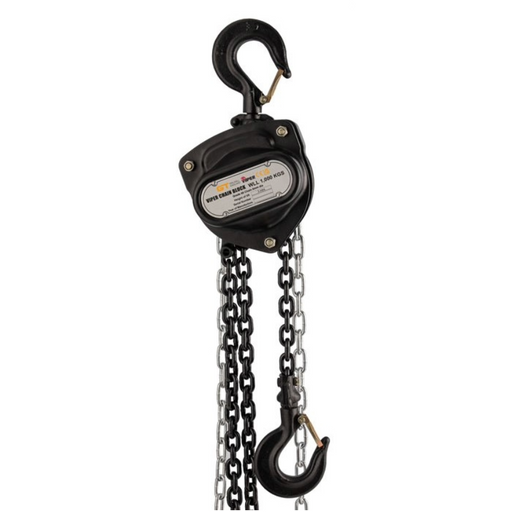
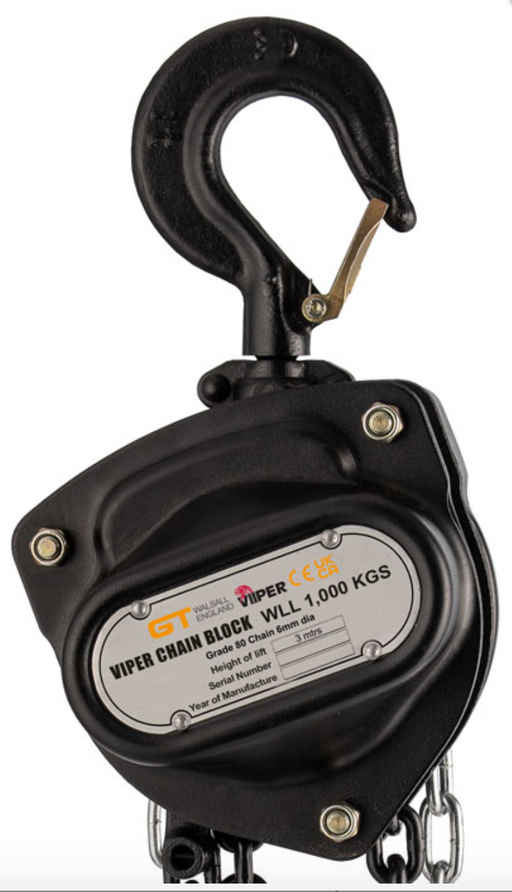
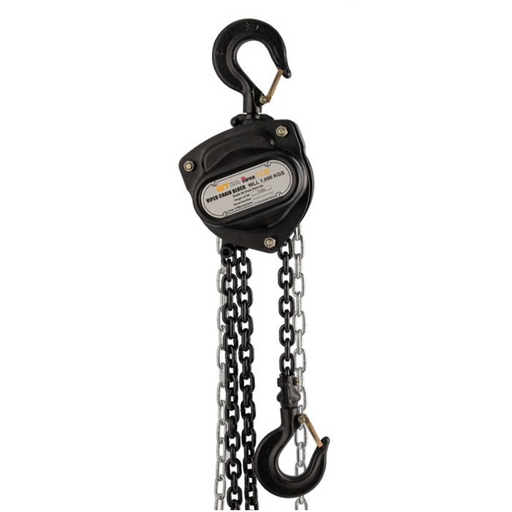
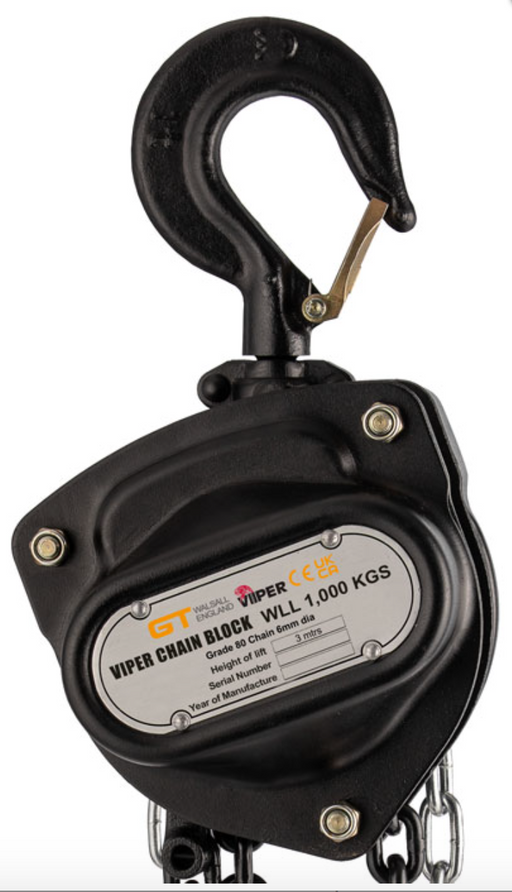
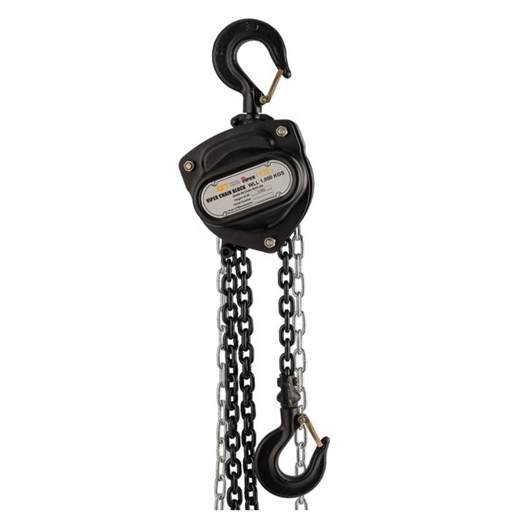
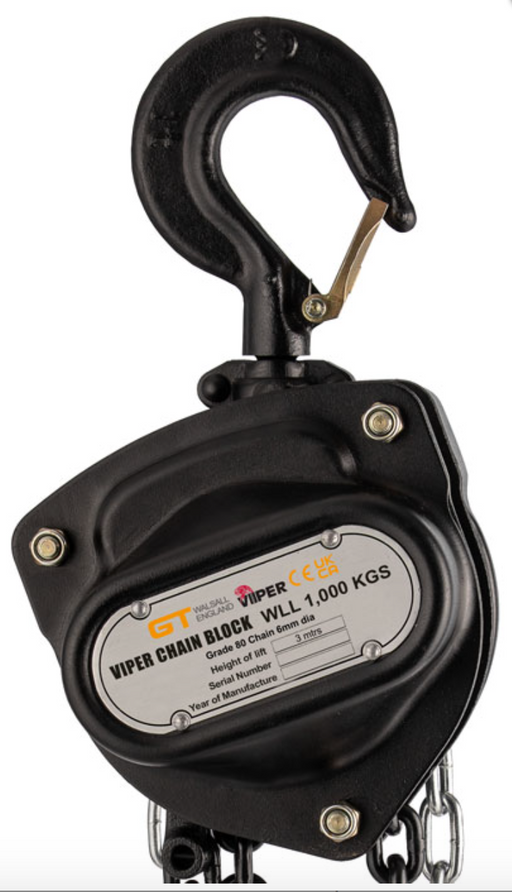
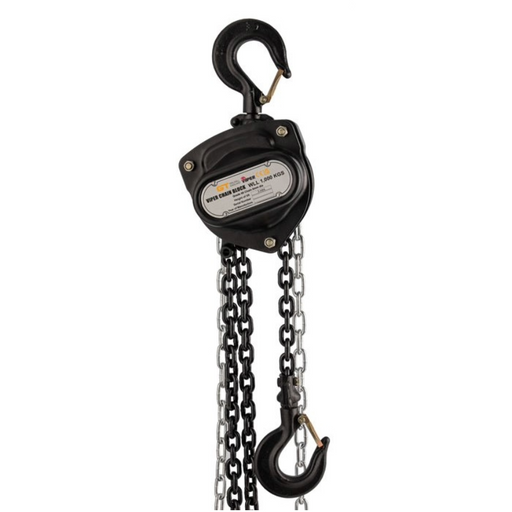
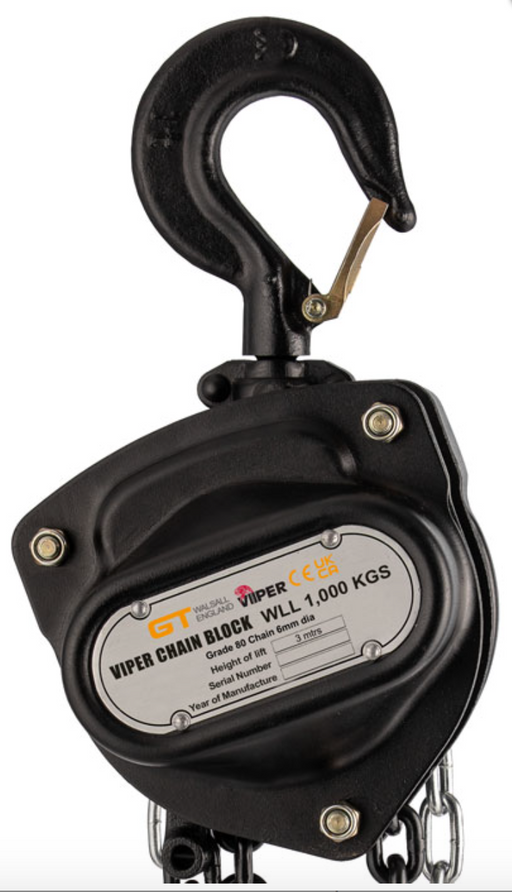
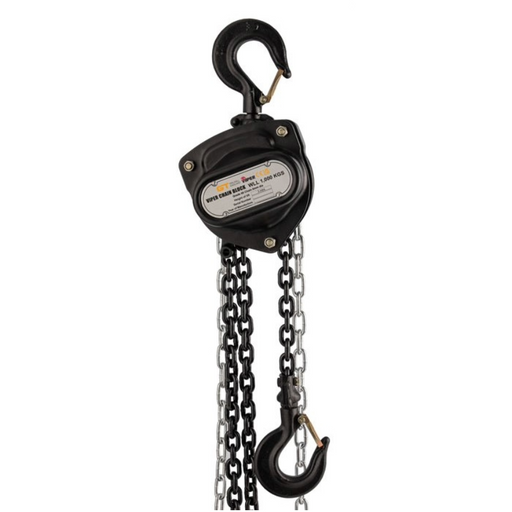
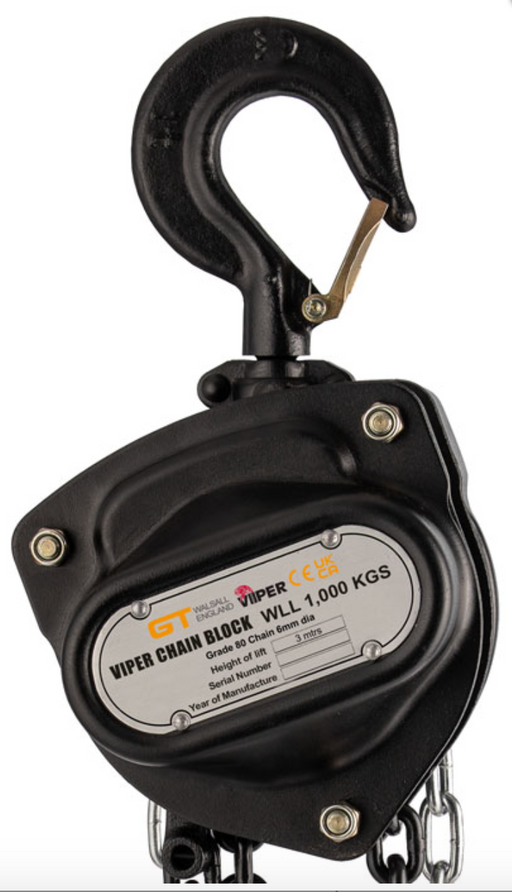
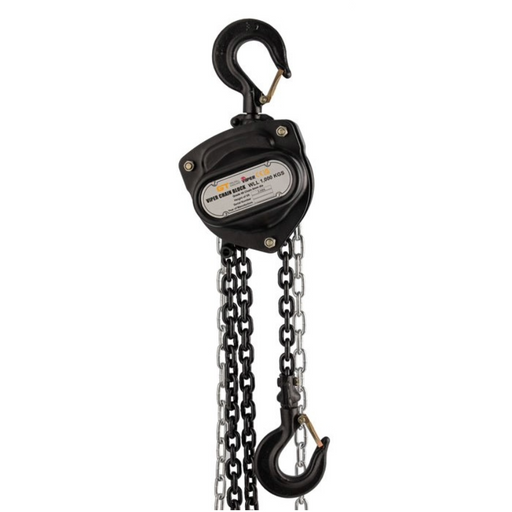
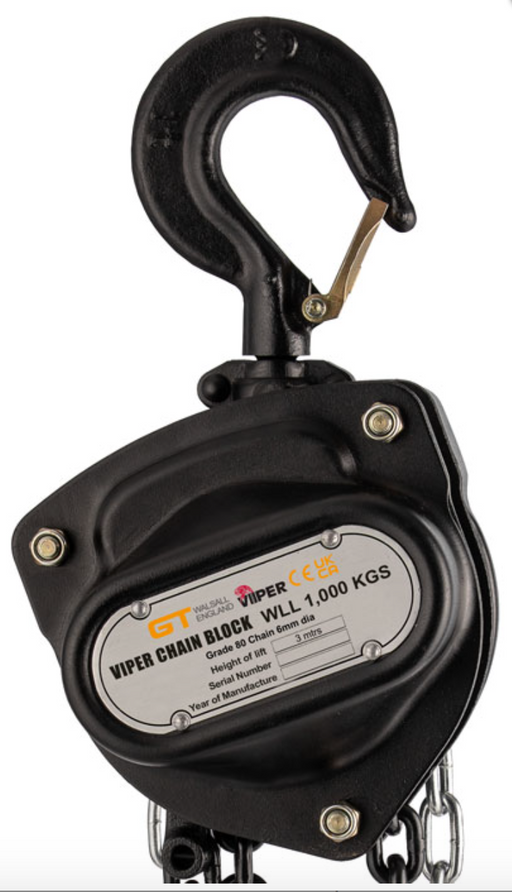
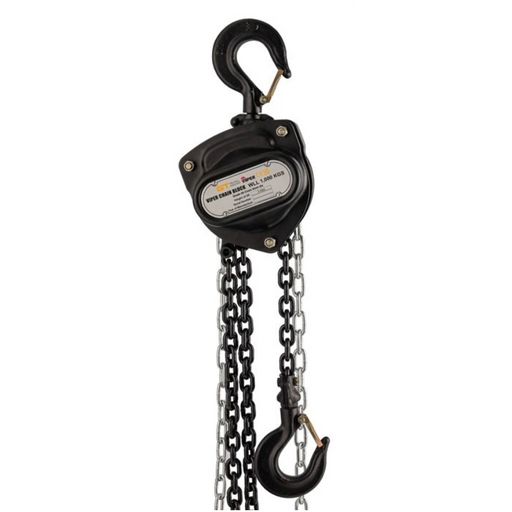
What is a chain block and how does it work?
A chain block, also called a manual chain hoist, is a mechanical lifting device that uses a hand-operated chain and internal gear mechanism to raise and lower loads vertically. Pulling the hand chain drives the gear train, which winds the load chain around a pocket wheel and lifts the load. The internal brake holds the load securely at any height when the hand chain is released. Chain blocks are commonly used in workshops, on construction sites and in industrial environments where a portable, overhead lifting solution is needed without the requirement for power.
What is the difference between a chain block and a lever hoist?
Both are manual chain hoists, but they operate differently. A chain block uses a hanging hand chain that you pull to raise or lower a load, making it well suited to long, continuous lifting operations. A lever hoist uses a short ratchet arm that you pump back and forth, giving you more control in confined spaces or where precise positioning is required, and also making it suitable for pulling loads horizontally or at angles. The GT Viper range includes both a chain block series and a 1,000kg lever hoist for this reason.
What Grade of chain do the GT Viper chain blocks use?
All GT Viper chain blocks use Grade 80, fine tolerance calibrated load chain that meets the working load limit performance requirements of BS EN 818-7. The hand chain is electro galvanised and calibrated for smooth, consistent operation.
Can GT Viper chain blocks be used for cross hauling or fleeting?
While cross hauling and fleeting are not generally recommended practice for chain hoists, the GT Viper chain blocks can be used for these purposes within specific safety guidelines. The manufacturer's guidance on this is included with each unit. If you are planning to use a chain block for anything other than straight vertical lifting, it is worth reviewing those guidelines carefully or contacting Winchshop for advice before use.